Hi everyone!
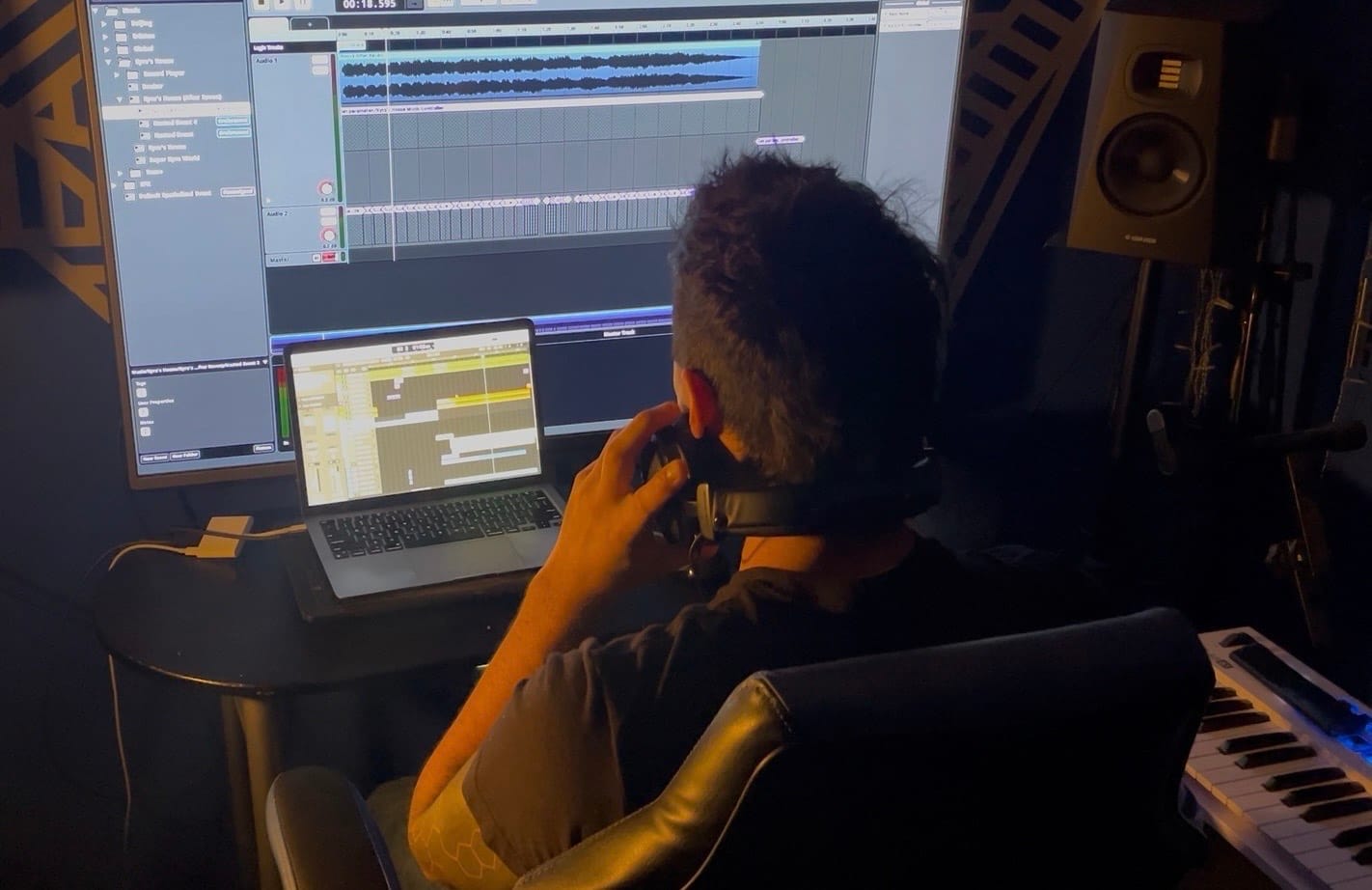
Twig here with an update from my perspective on the development of Mithra. I’ve been embedded in the dev team since pretty early on in the project which has given me an excellent opportunity to iterate and test ideas as we build the game to make sure that everything is exactly the right fit. Here’s what I’ve been up to...
The Music
It actually took me quite a while to land on ‘the sound’ for Mithra. The team leads Jared and Dan had originally suggested that the music would be focused on long, held notes and a very ambient sort of vibe. The two original pieces that I developed under this style still remain and can be heard in the demo. These first pieces used a lot of analogue synth patches and had a bit of a synthwave/cyberpunk aesthetic.
As I progressed through making the music for the next acts of the game, I had the idea to feature a different instrument for each of the different locations to be explored. For example, in the London act, I had a focus on washy/reverb soaked guitar parts.
The next act would have featured more organic pianos and plucked instruments while maintaining the bed of analogue synth patches.
This ended up presenting a problem.
Instead of giving a feeling of progression through the acts, it felt disconnected and disjointed. As though it were music made for three or four separate games as opposed to a single continuous narrative.
When working on the music for the final act, I had stumbled on a sonic quality that I felt complimented the world and story of Mithra perfectly. Texture. The music I had written for the final act was where I began experimenting with more textured sounds and it was my eureka moment. When I say texture, what I mean is crackling old vinyl, distortion, layers of sound that go beyond ‘musical’ elements. There’s more than just notes, there’s sonic roughness.
Texture.
I went back and re-wrote or re-worked 75% of the music in the prologue and all of the music for acts 1 and 2. Altogether, I discarded about 10 finished pieces of music.
It was the right call. What I was left with was a cohesive sonic landscape that feels at times warm and cosy but with an edge of uncertainty or unease.
I’m SO very excited to share this work with you all and I hope you’ll feel the passion and care I’ve put into my little corner of this special game.
The Sound Design
Everything that would make a sound should have a sound. That’s my philosophy when it comes to filling out the world with sounds. That philosophy applies both to the static ambient sounds like the hum of a refrigerator or an air conditioning unit and the active sounds like our protagonist Kyra trying to fix a broken device and hearing all of the little creaks and clicks of handling the pieces.
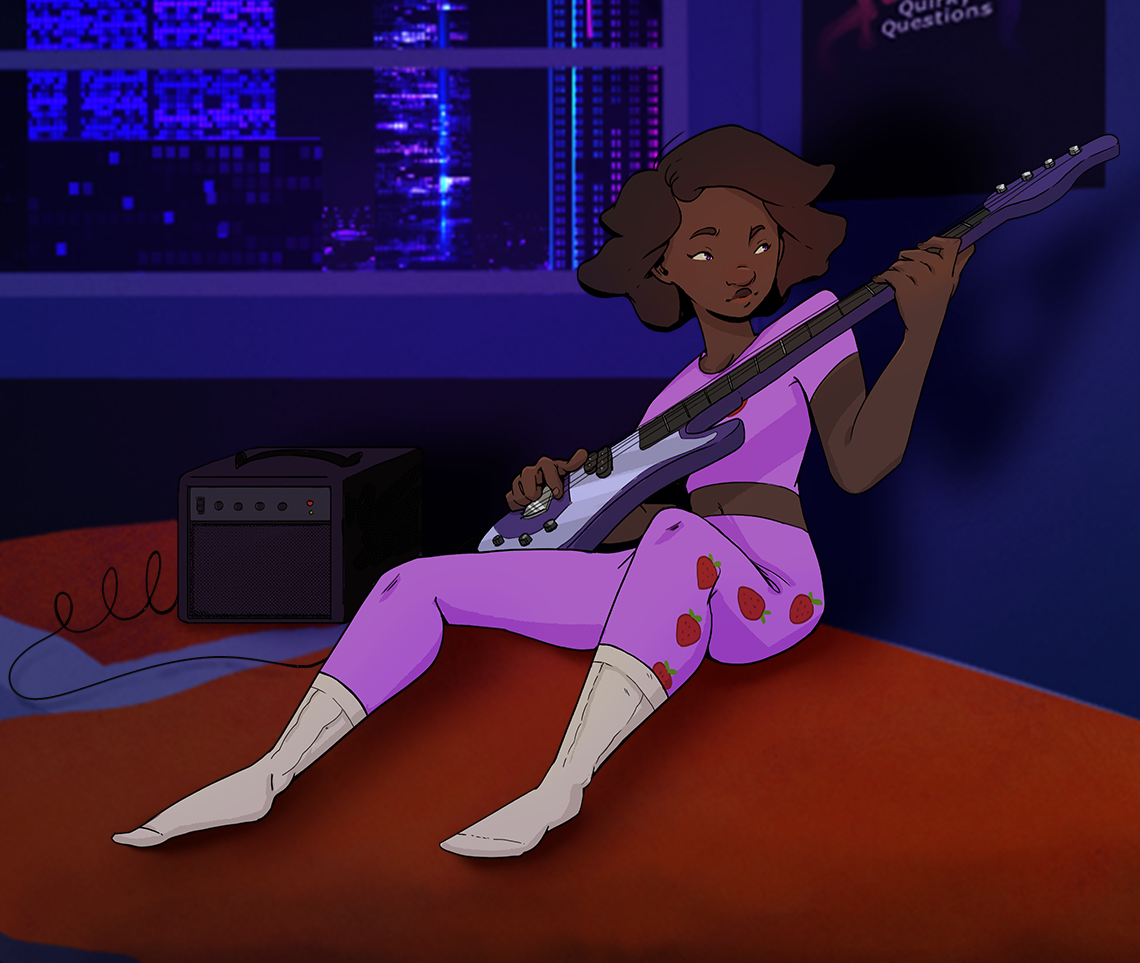
Also important to me is attention to detail. Kyra is a bass player. Her bass sits on its stand in her room and the player can interact with it. Of course, if you interact with a bass, it better make a sound (because everything that would make a sound should have a sound). At first I just had her play the strings in their ascending order. This was fine, it made the sound and it sounded like a bass. But one day during a playtest, the background music began to play. The notes played on the bass were clashing with the notes playing during the background music. No. Not having that. I set up the audio logic and manually tagged all of the music that can play during the prologue so that whatever the bass note is in the music, the appropriate bass note will play. Much better.
There will be lots of little sonic details like this in Mithra and my hope is to create a soundscape that enhances your immersion in the world. Humans derive so much information about the world through sound and I’m hoping to bring that same delivery of information through sound design.
Conclusion
I’m honoured and privileged to work with such an amazing team and I couldn’t be more excited for you all to see what they’ve been cooking up. Thank you for checking this out and have a great summer!
- Twig